
In France, the stabilization of hybrid telecommuting and the gradual return to the office are reshaping family organization. Active mothers are no longer just looking for household tips, but for methods that take into account shifting professional constraints, sometimes fragile childcare arrangements, and a mental load that spills over from the private sphere.
Managing the Unexpected: The Real Breaking Point for Active Mothers
Content on family organization focuses on planning. Preparing meals, anticipating the week, tidying up the house. All of this assumes that the week goes as planned.
Field reports show a different reality: the unexpected remains the main factor of imbalance. A sick child on a Tuesday morning, a transport strike, a nanny unavailable without notice, a meeting rescheduled at the last minute. These situations cannot be resolved with a weekly schedule.
Building a concrete safety net requires identifying three or four people in advance (neighbor, parent of a classmate, close family member) who can be reached in case of urgent need. Several emergency childcare platforms exist, but their geographical coverage remains uneven, especially outside major urban areas. Resources like mamanauquotidien.fr compile options suited to these last-minute situations, often absent from traditional guides.
Keeping an accessible file (digitized health record, updated paracetamol prescription, family doctor’s number, signed permission slip) saves precious time when the day goes off track.

Hybrid Telecommuting and School-Creche Coordination: Adapting Routines to Real Schedules
Post-pandemic telecommuting no longer resembles that of 2020. Days in the office are often mandated by the employer, and flexibility varies greatly depending on the size of the company. In smaller structures, schedule adjustments remain rare. Adapting one’s organization without knowing this constraint is akin to planning in a vacuum.
A working approach: distinguish “office” days from “home” days and build two different routines rather than one average routine.
- On office days, focus household tasks on the bare minimum (starting the washing machine before leaving, preparing meals the night before or freezing homemade ones). The commute imposes a rigid schedule, leaving little room for maneuver.
- On telecommuting days, use the lunch break to tackle a quick chore (approved online shopping, medical appointment by phone, sorting a drawer). The time saved on the commute is reinvested in family logistics.
- Identify a fixed day each week for administrative tasks (bills, registrations, school paperwork) and stick to it, rather than handling them on the fly between meetings.
This division into two modes avoids the frustration of “ideal” routines that collapse as soon as the context changes.
Mental Load and Task Distribution: What Lists Don’t Solve
Creating a list of household chores and distributing them among household members is a recurring piece of advice. It faces a well-documented obstacle: the mental load is not just about executing tasks. It involves thinking about what needs to be done, checking that it’s done, and following up when it’s not.
Delegating a task without transferring the responsibility for thinking about it does not reduce this load. If you have to remind every evening that the backpack needs to be ready, the task still belongs to you.
Transfer Responsibility, Not Just Action
The difference lies in the phrasing. “Can you start a load of laundry?” leaves the planning to the one who asks. “You do the laundry from Monday to Wednesday, I’ll do it from Thursday to Saturday” transfers both the action and the trigger. Assigning complete areas rather than isolated tasks reduces the number of daily decisions.
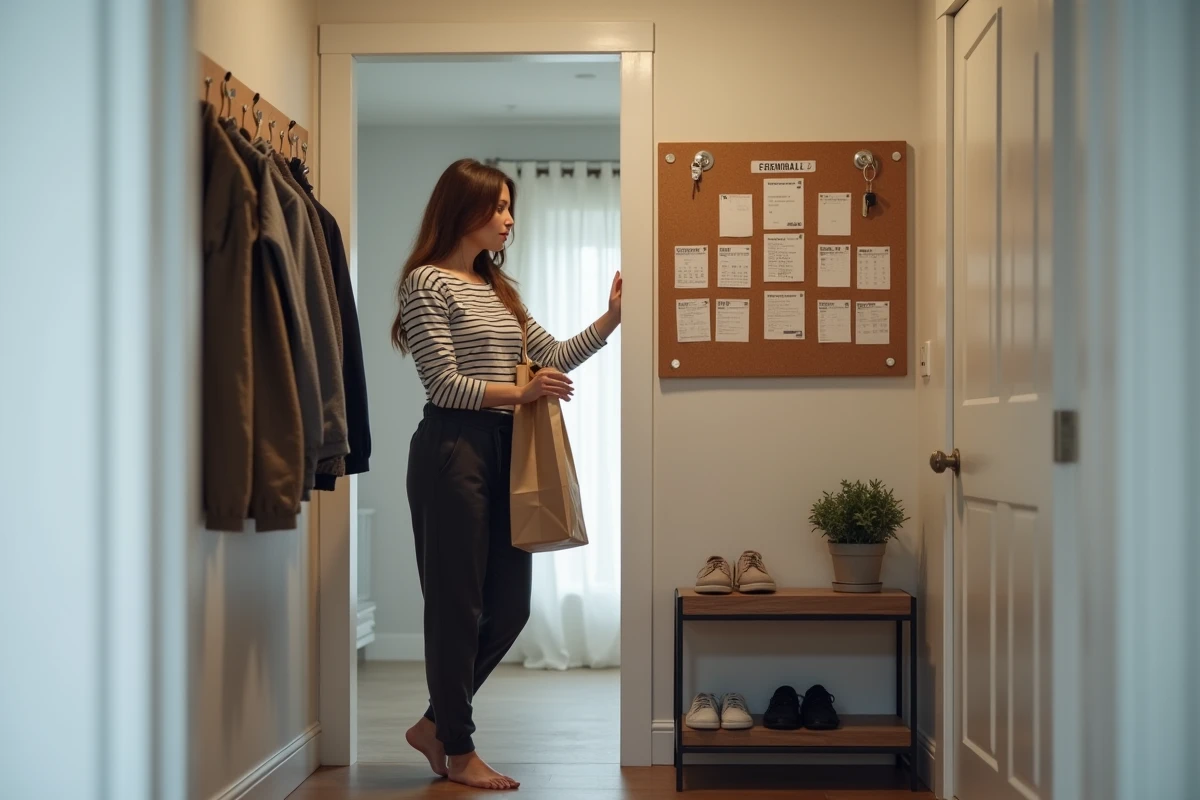
This principle also applies to children as soon as they reach school age. A six-year-old can be responsible for placing their coat in the same spot and putting their dirty laundry in the basket. The result may be imperfect, but the routine establishes itself over several weeks.
Weekday Meals for Active Families: Beyond Batch Cooking
Batch cooking, which involves preparing all meals for the week in one session, dominates online advice. This method requires two to three consecutive hours of cooking on Sunday, which assumes a free slot and available energy. For many active mothers, this slot does not exist every week.
A more realistic alternative: cook double at each evening meal. Preparing twice the amount of rice, tomato sauce, or roasted vegetables takes only a few extra minutes. The additional portion becomes the next day’s lunch or a backup dinner midweek.
Simplifying Grocery Shopping Without Spending Two Hours
Maintaining a permanent shopping list (on the refrigerator or in a shared app) that each household member adds to as needed avoids the Saturday morning planning session. The goal is to reduce decision-making, not to create another system to manage.
- Define a base of recurring meals (five or six simple recipes that the whole family accepts) and alternate them without seeking variety at all costs.
- Order online with a saved typical basket, only adding the fresh products for the week.
- Accept that one meal in three can be minimalist (pasta, eggs, frozen vegetables) without guilt. Consistency is better than occasional nutritional perfection.
The available data does not allow us to say that one method of food organization prevails over others for all families. The determining criterion remains consistency: a simple system maintained for six months beats an elaborate system abandoned in three weeks. The daily lives of active mothers are built less on spectacular hacks than on repeated micro-adjustments, calibrated to the real constraints of each household.