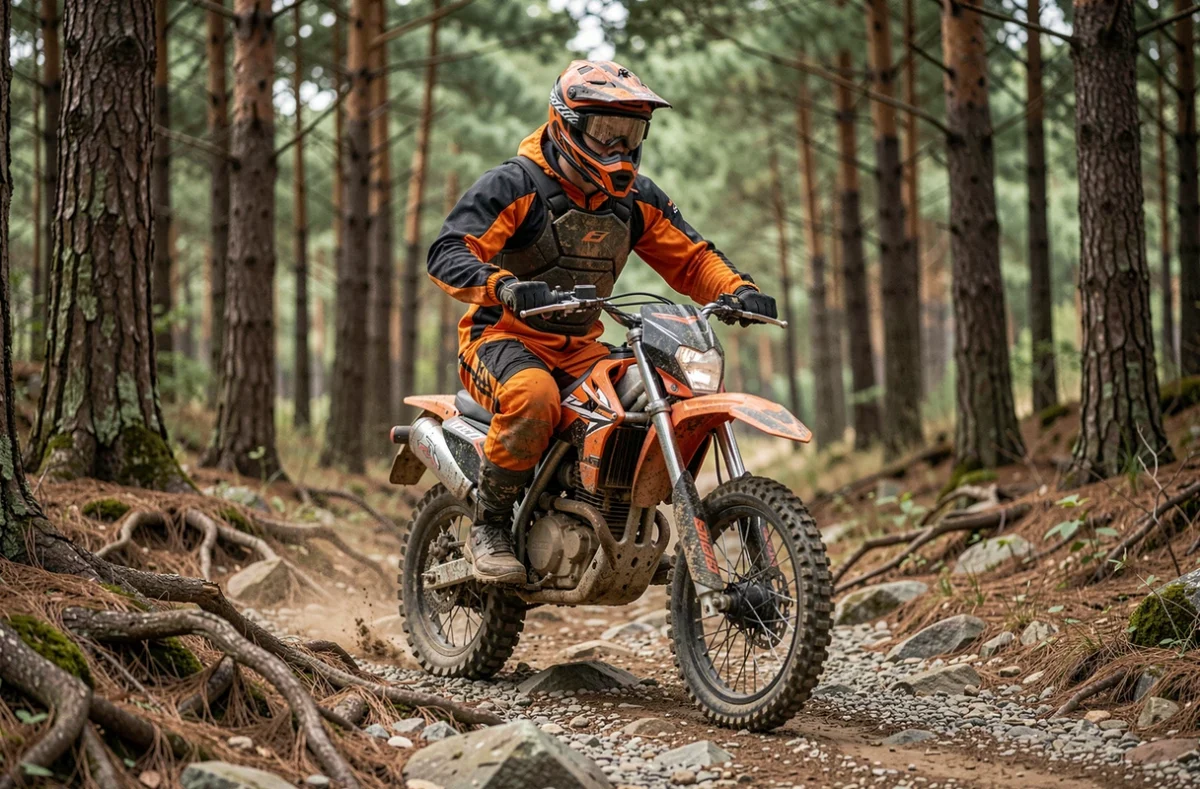
The question comes up often on forums: which 125 enduro should you choose as a beginner or if you want to ride with an A1 licence? The AJP PR3 125 regularly appears in these discussions, often presented as a smart choice. The reality deserves a closer look.
The PR3 125 described in most spec sheets refers to model years produced between 2008 and 2015. So this isn’t a new bike currently in the catalogue, but a used model whose condition, paperwork and parts availability vary from one example to another.
Cost of restoring an AJP PR3 125 versus buying a recent 125 enduro
You’ve spotted a PR3 125 at an attractive price in a classified ad. Before reaching for your wallet, ask yourself a practical question: how much will it cost to restore compared with the price of a more recent alternative?
For an older PR3, common consumables (brake pads, chain, filters) are still listed by some specialist suppliers. However, delivery times for some original parts need to be confirmed with sellers. If a fork seal or master cylinder is impossible to find, the bill can quickly rise as a result of improvised modifications.
To work out the real budget, list the following items:
- Front and rear tyres (the PR3 uses a 17-inch rear wheel, a less common size that limits the choice of enduro tyres)
- Complete chain kit, brake pads, brake fluid, air and oil filters
- Suspension parts (fork seals, fork oil, possibly a shock absorber spring)
- Roadworthiness inspection or compliance costs if there are questions about the registration document
Add up these costs and compare the total (purchase price + restoration) with the price of a recent 125 enduro sold with a warranty. If the difference is only a few hundred euros, a recent bike with available parts and paperwork in order makes everything simpler. This is especially worth considering if the PR3 you’re looking at is a model no longer in AJP’s current range, having been replaced by the SPR 125 Enduro.
A detailed article explores this dilemma: AJP 125 PR3 enduro: the best choice? It compares the bike’s real strengths with the drawbacks of an older model.
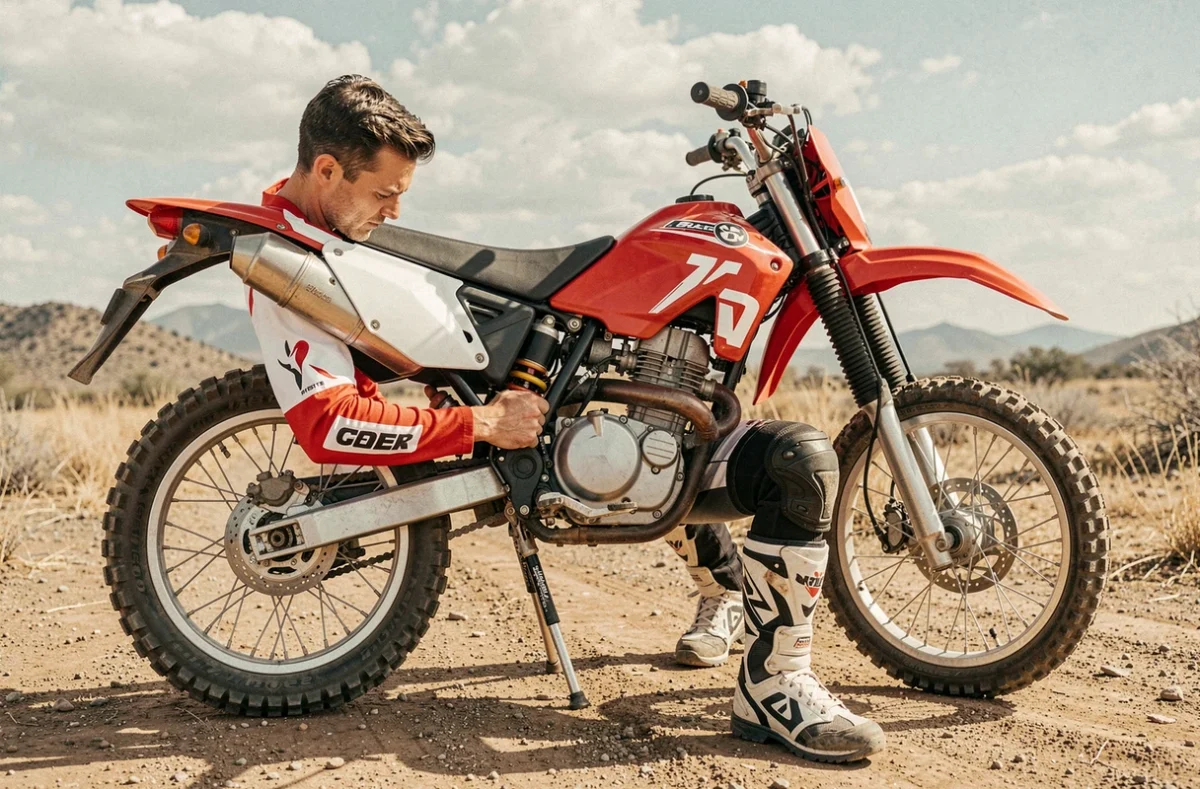
Registration and road approval: the little-known pitfall of used 125 enduro bikes
An online spec sheet guarantees nothing about the bike you’re about to buy. The name “PR3 125” alone doesn’t prove that the motorcycle is road-legal. Two examples of the same model can have very different statuses depending on their history.
Before completing any purchase, check three things:
- The registration document must be in the seller’s name, and its serial number must match the number on the motorcycle’s frame
- Required equipment (lights, mirrors, number plate, kickstand) must be present and working
- A vehicle status certificate can confirm that there are no restrictions or liens
A motorcycle without valid registration is an administrative headache and can sometimes be impossible to regularise. This issue particularly affects small-displacement imported bikes and niche models whose original documentation has been lost.
Have you noticed that some listings say “registration to be arranged”? In most cases, this means the seller hasn’t managed to obtain the paperwork. The risk is buying a motorcycle that can’t be used on the road.
125 enduro alternatives to compare for your needs
The PR3 125 is far from the only 125 enduro option. And meaningful comparisons aren’t limited to recreational four-strokes. There are two main categories.
125 four-strokes: versatility and straightforward maintenance
Several 125 four-strokes are available new and used. For a beginner, seat height and ready-to-ride weight matter just as much as the engine specifications. A four-stroke engine requires standard maintenance: regular oil changes and timing checks in line with the manufacturer’s recommendations.
For smaller riders, seat height remains a decisive factor. The PR3 appealed precisely because of its compact size, with a 17-inch rear wheel that lowered the seat. But this feature also limits its performance on demanding off-road terrain.
125 two-strokes: a different kind of riding
Models such as the Fantic XE 125 and Beta RR 125 2T are also available on the market. Bear in mind that these bikes aren’t direct equivalents to the PR3. A two-stroke engine delivers its power differently: sharper response, a narrower powerband and more frequent maintenance (piston, rings, clutch). Licensing regulations may also differ.
Beta 125 model names can sometimes be confusing: some four-stroke versions are reported to be discontinued, while the two-strokes remain in the catalogue. Check the exact model year and engine type before making any comparisons.
Suspension, weight and terrain: what really matters on a 125 enduro
Beyond the engine, two factors distinguish an enjoyable 125 enduro from a frustrating one: suspension quality and total ready-to-ride weight.
The PR3 125 came with suspension that was adequate for light recreational riding, but not designed to handle jumps or rocky terrain. Moto-Station’s testers called it a “toy”—an affectionate term that sums up its intended role. It excels on smooth trails and easy singletrack, not on demanding terrain.
The PR3’s low weight remains its greatest advantage for beginners. A light motorcycle is more forgiving of riding mistakes, easier to pick up after a fall and less tiring on a ride lasting several hours. When you’re new to off-road riding, this matters more than outright power.
A recent 125 enduro with quality suspension and a manageable weight offers a better-balanced package. The higher purchase price pays off in reliability and riding enjoyment over the long term.
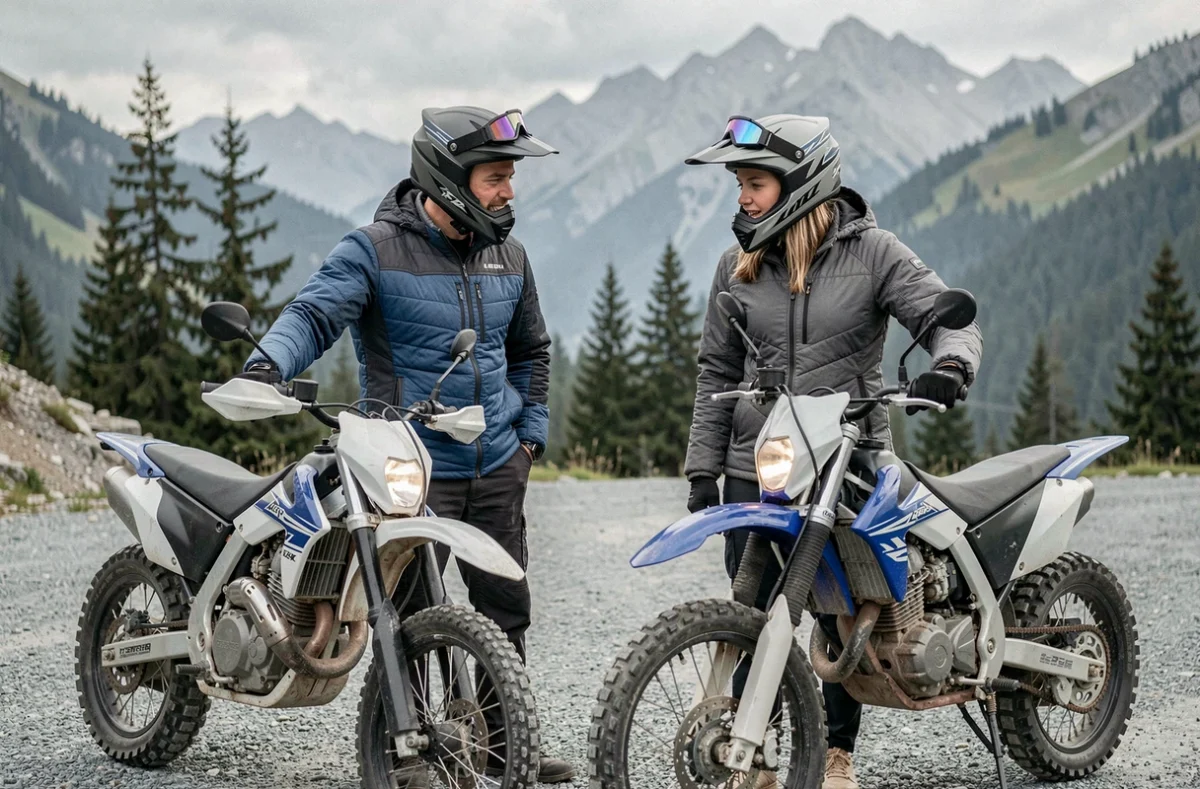
Choosing a 125 enduro means weighing up your immediate budget, ownership costs and suitability for the terrain you ride. The PR3 125 remains deservedly popular for its light weight and low seat. But with an older example, the real price includes tracking down parts and checking the paperwork. Comparing that total with the price of a recent bike with a warranty helps you make an informed choice rather than take a gamble.