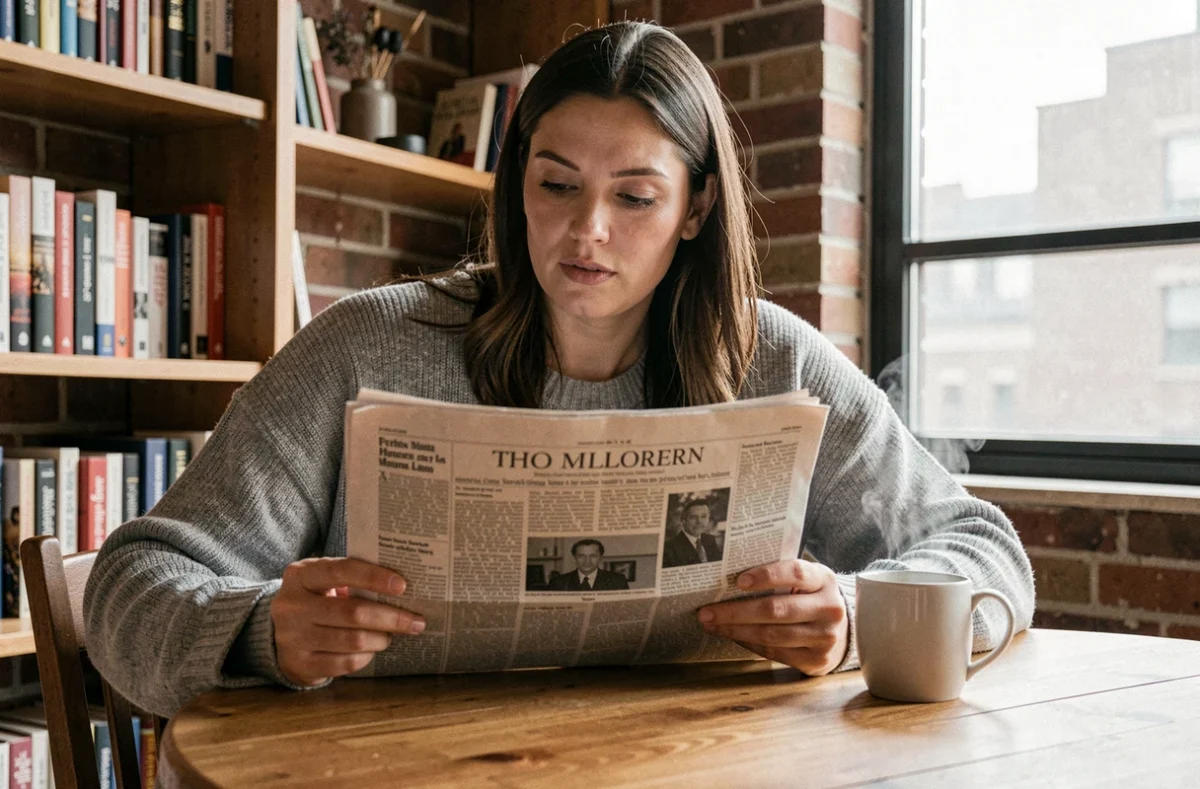
The French have never had so many ways to follow the news: social media feeds, podcasts, newsletters, and AI-generated summaries. This proliferation of entry points does not guarantee a better understanding of events.
Since August 8, 2025, the European Media Freedom Act (EMFA) has applied across the European Union to protect the independence and pluralism of the press. This framework is a reminder that the reliability of information depends on the conditions under which it is produced, not just the channel through which it reaches us.
Fact-checking the news in the age of automated summaries and chatbots
A Nice-Matin article published in November 2026 documents the growing use of chatbots by young people to get their news. The main risk: an AI-generated claim circulates and gains traction online without its origin being identifiable.
When the first answer to a news question comes from an automated summary, the instinct to verify changes. The task is no longer to compare two articles, but to trace an unsigned text back to a source with a named author. In practice, a chatbot’s answer should be checked against the sources it cites (if any) or a news outlet with an identifiable editorial team.
Three pointers can help you quickly assess an automated summary:
- Does the text mention a specific source (a media outlet, news agency, or institution) that you can consult directly?
- Is the information dated, or does it lack a time reference, making it impossible to tell whether it is still valid?
- Does the same fact appear in at least two independent newsrooms, or only in automated rewrites of the same newswire report?
The 123-info.fr portal aggregates news feeds from a range of French-language sources, making it easy to compare coverage of the same event without opening multiple tabs.

Reliable news sources: distinguish the channel from the source
Discovering a fact on social media does not mean you have to trust the platform. The channel where you discover something and the source you use to confirm it are two different things. A tweet, Instagram post, or TikTok clip can alert you to an event, but verification means consulting the outlet or institution that produced the original information.
The EMFA now requires EU member states to ensure transparency around media ownership and editorial independence. In practice, this means attentive readers can check who owns the outlet they are consulting and assess the potential interests behind its editorial line. Before the regulation came into force, there was no harmonized transparency requirement.
Practical criteria for assessing a source
A media outlet that bylines its articles, publishes corrections, and clearly discloses its ownership structure offers more safeguards than an anonymous page. A publicly available editorial charter, a named editorial team, and a visible corrections process provide a basic level of assurance.
A bylined, dated, correctable article is worth more than a polished summary with no author. This simple criterion rules out a significant share of content generated or copied without verification.
The cost of producing news and media pluralism in France
Verified news requires financial resources. Field investigations, correspondents, and fact-checking all come at a cost, which French authorities, including Arcom, regularly document. When a media outlet cuts staff or relies entirely on advertising revenue, economic pressure directly affects the quality and diversity of what gets published.
Understanding this mechanism changes how we consume the news. A free article is not necessarily less reliable than a paid one, but when an outlet is entirely free, it is worth asking how it is funded: advertising, philanthropy, subsidies, or low-cost automated production. Each model has implications for editorial independence.
Supporting journalism through your choices as a consumer
Subscribing to one or two publications whose work you value, sharing articles instead of cropped screenshots, and disabling ad blockers on trusted sites: these actions are not acts of activism, but a way to align your demand for quality with the resources you are willing to devote to it.

A daily news routine: spend less time without losing understanding
Information overload leads some readers to disengage completely. Others scroll endlessly without retaining much. A short, structured routine delivers better results than constant, passive monitoring.
A format that works for many busy readers:
- In the morning, scan the headlines from a general-interest newspaper (website, app, or newsletter) for five to ten minutes, picking out two or three stories worth reading in depth.
- During the day, read one in-depth article on one of those topics, choosing a long-form format (investigation, report, or analysis) rather than a succession of short news briefs.
- At the end of the week, listen to a podcast or watch an analysis video on a topic you have been following for several days, to build a deeper understanding beyond the daily news cycle.
This routine avoids two pitfalls: ignorance through disengagement and fatigue from constant exposure. Ten focused minutes are worth more than an hour of passive scrolling through algorithmic news feeds where readers have little control over how information is prioritized.
Choose formats to suit the reading context
Radio remains an underrated source for daily news: news bulletins lasting just a few minutes provide a concise, factual overview without demanding visual attention. French-language news podcasts have proliferated, with formats ranging from five to twenty minutes that work well during commutes or breaks.
Short videos (on YouTube, Snapchat, or Instagram) can serve as an entry point, provided you then go back to the full article or report when the topic warrants it. The format does not determine reliability; what makes the difference is whether the reader takes steps to verify the information.
No single channel is enough to cover the complexity of the news. But combining two or three complementary formats and making a habit of tracing information back to its source can turn passive consumption into an active understanding of everyday events.