
A chunky wool throw draped over a sofa, walls in muted shades and solid oak flooring: it’s easy to picture the ideal cosy home.
The problem arises with the first summer, when those same choices turn the living room into a sauna, or a few months later, when the bathroom cabinet warps in the humidity. Creating an interior that feels genuinely comfortable all year round means balancing your decorating preferences with the practical demands of each room.
Thermal comfort and a cosy atmosphere: avoid the overheating trap
We instinctively associate visual warmth with physical warmth. Heavy fabrics, dark colours and yellow-toned lighting enhance that feeling in winter, but can make summer discomfort worse in a south- or west-facing room.
Start by identifying which rooms heat up quickly. Shutters, sun protection and lighting choices all help keep you comfortable without overheating: a thick linen curtain keeps out the cold in December and filters direct sunlight in July, whereas dark velvet absorbs heat and releases it in the evening.
Terracotta, ochre and sage green add depth without making a room feel too dark. You can reserve the darkest shades (burgundy, midnight blue) for north-facing walls, which are naturally cooler, and keep lighter colours for sun-exposed walls. This simple approach to zoning by orientation can change how a space feels without having to repaint twice a year.
For practical ideas on transforming each room, you’ll find detailed approaches at https://uneautremaison.com, with advice to suit different styles and budgets.
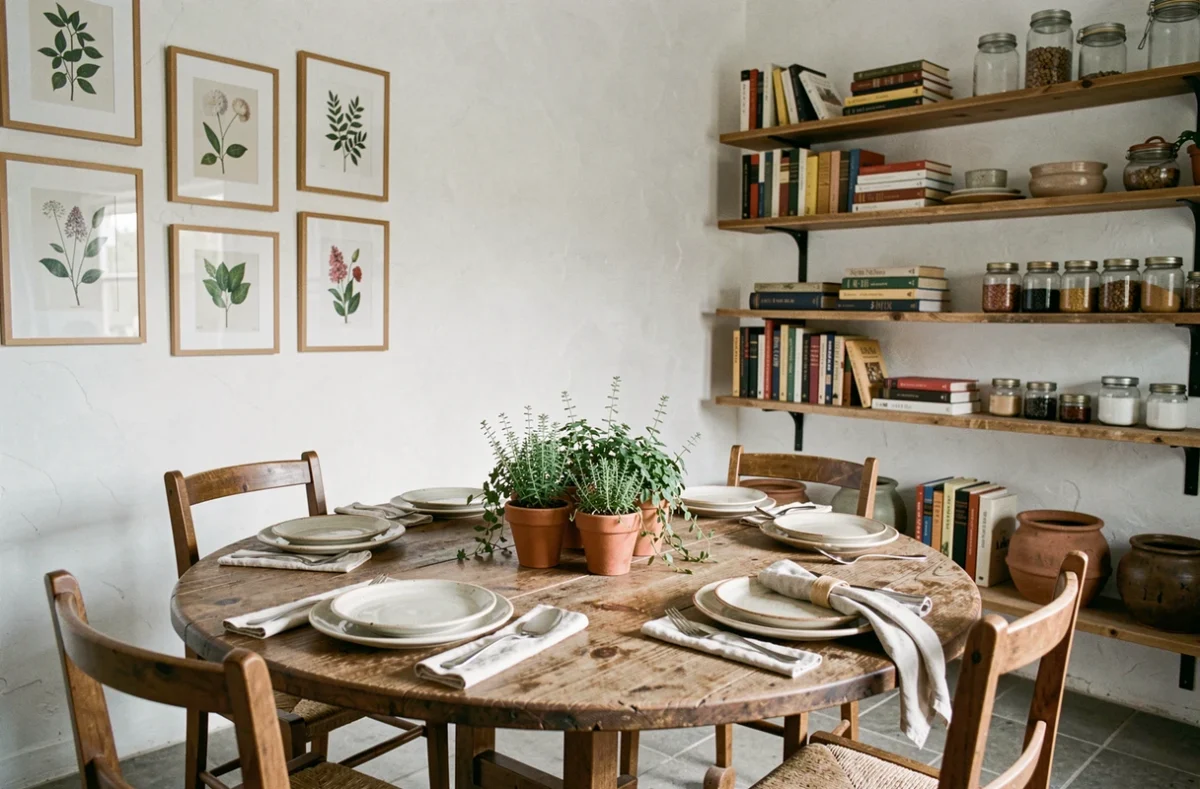
Natural materials in damp rooms: choose for practicality, not appearance
Raw wood and natural stone feature in just about every interior design inspiration. Their texture and irregularity create a visual warmth that laminate or smooth tiles struggle to replicate. The catch is that wood can suffer in a poorly ventilated damp room, while porous stone used for a kitchen worktop can stain at the first splash of beetroot juice.
Wood in the bathroom and kitchen
Not all wood species respond in the same way. Teak and oiled oak stand up well to occasional moisture; pine and beech much less so. Before installing a solid wood vanity unit, check two things: the room’s ventilation (a properly functioning mechanical ventilation system makes all the difference) and the type of finish (water-repellent oil rather than simple wax).
If the ventilation is inadequate, it’s best to limit wood to accessories (a framed mirror, a wall shelf) and use a waterproof finish in areas exposed to splashes. You’ll get the cosy atmosphere without the risk of mould after a couple of winters.
Stone and polished concrete
Untreated limestone absorbs liquids. Used as a kitchen splashback, it needs regular reapplication of a water-repellent treatment. Polished concrete, often presented as a raw, cosy alternative, also requires specific care: it can develop hairline cracks if the substrate shifts. Choosing materials to suit the demands of each room helps avoid disappointment in the medium term.
Durable, modular furniture: refresh your decor without replacing everything
A home that reflects your personality evolves with your habits. Repairable, slipcovered and second-hand furniture lets you refresh the look without replacing all your furnishings. A sofa with a removable cover can change colour in an hour. A vintage chest of drawers can be transformed with matte paint and new handles.
- Removable covers (for sofas, cushions and armchairs) make it easy to switch from a winter palette to a summer one without buying new furniture
- Modular furniture (adjustable shelving, extendable tables) adapts as your household’s needs change—a more useful feature than a fixed aesthetic
- Second-hand furniture brings a patina and individuality that mass-produced new pieces can’t replicate, while reducing the overall cost of furnishing your home
This approach of choosing adaptable furniture over permanent pieces reflects recent shifts in home design, which favour repairability and modularity over replacing items.

Lighting and flow: two often-overlooked ways to make your home more welcoming
Before thinking about accessories, it’s worth identifying what actually gets in the way day to day. A cluttered hallway, a living room with just one white ceiling light, a lack of storage that forces you to stack things up: these irritations affect how a space feels more than one extra decorative object ever could.
Use multiple light sources
At least three light sources in each living space (a ceiling light or pendant, a reading lamp and an accent light) are enough to create distinct moods. Choose bulbs with a colour temperature below 3,000 kelvins for warm light, but avoid going too low, as this can strain your eyes at the end of the day.
Keep walkways clear
A cosy home is also one where you can move around without having to dodge obstacles. Clear the path between the sofa and the table, and choose closed storage instead of overcrowded open shelving: these steps may not feature on any mood board, but they change how you use the room.
- Identify the busiest walkways and check that no furniture is blocking them
- Replace overflowing open storage with closed options (a sideboard, a lidded woven basket) to reduce visual clutter
- Choose one or two decorative objects per surface rather than building up a collection that eventually overwhelms the space
Identifying what’s getting in the way before you decorate is the most worthwhile advice. A home that reflects your personality isn’t created by adding more objects, but by first resolving everyday frustrations, then dressing the space with materials and colours chosen to last beyond a single season.