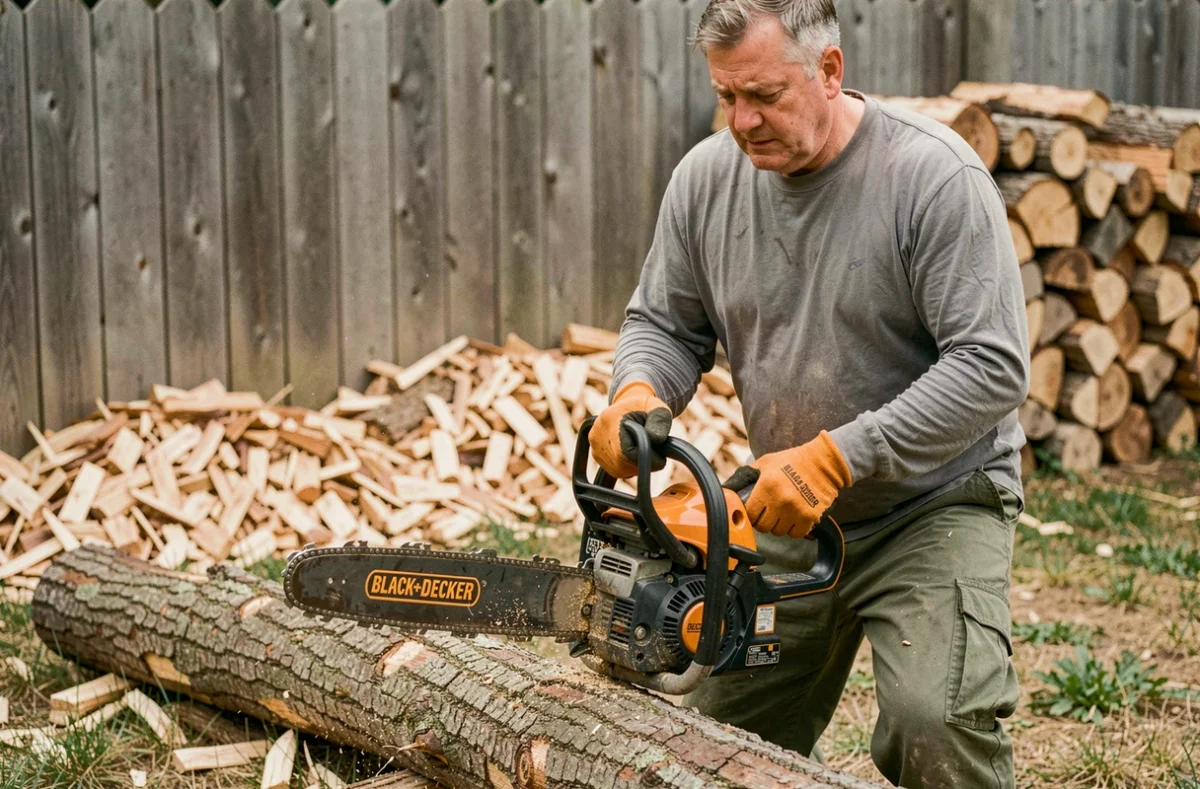
Cutting a branch from an apple tree, chopping some logs after a storm, cleaning up a pile of wood without dragging an electric cable through the garden: this is the playground of the Black+Decker GKC3630L25-QW. This 36 V cordless chainsaw promises generous autonomy and an accessible grip. The question remains whether, in practice, the promise holds up against sometimes cheaper or faster alternatives.
Chain speed at 5 m/s: what this really changes in the garden
Most entry-level battery chainsaws operate between 4 and 8 m/s. The GKC3630L25-QW sits at 5 m/s, making it a rather slow machine in its category. Why this choice from Black+Decker?
The answer is one word: endurance. The motor runs slower to consume less energy per cut. You won’t cut through an oak trunk in three seconds, but you can keep making cuts without draining the battery after ten minutes.
On softwood (fir, poplar, birch) up to about twenty centimeters in diameter, the relative slowness is not an issue. The chain bites well, and the result remains clean. On hardwood (oak, beech, ash) beyond fifteen centimeters, cutting becomes laborious. You need to let the chain work without forcing it, or you risk derailing it or overheating the guide.
As detailed in the complete guide on tronconneuse.xyz, this chainsaw is not designed to replace a gas model. Its domain is regular maintenance: pruning, cutting dead branches, processing small firewood.
36 V battery life: the real argument against 18 V models
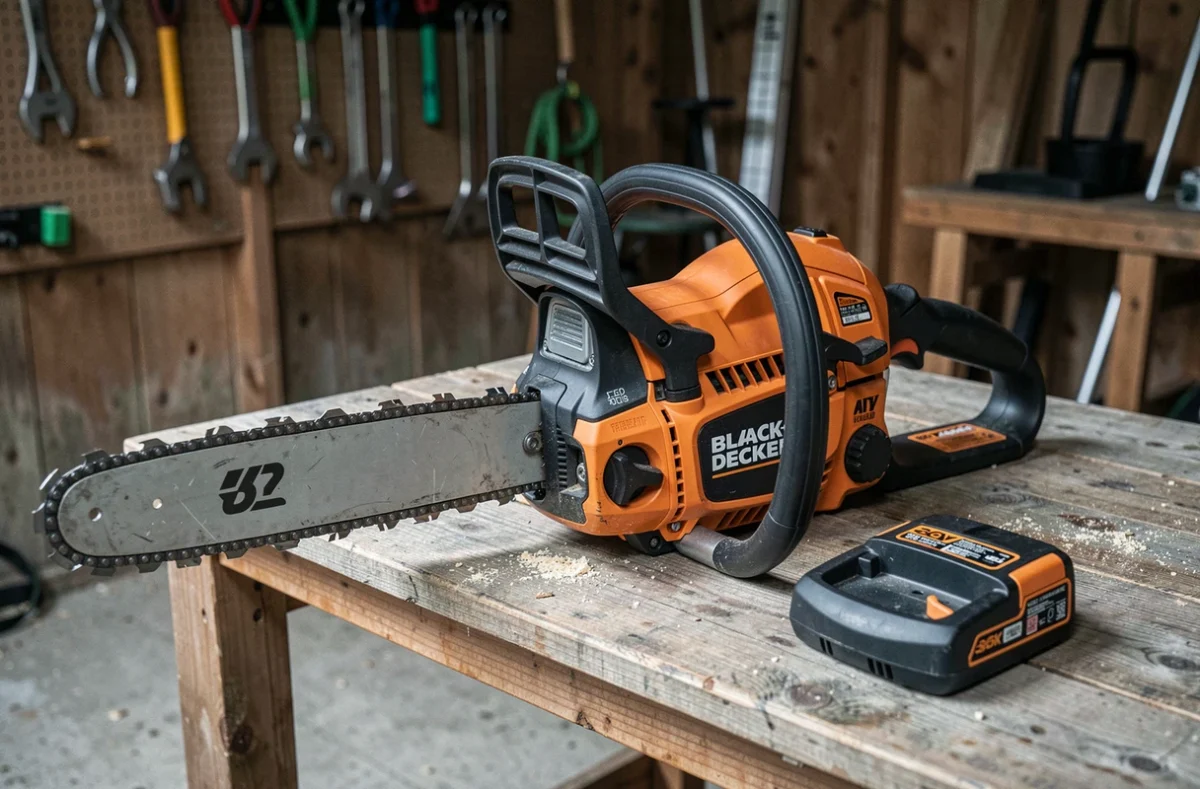
Black+Decker claims 560 cuts per full charge. This figure, measured on small diameter branches, does not reflect actual use on varied wood. In typical conditions (branches from 5 to 15 cm, medium-hard wood), the autonomy remains more than sufficient for one to two hours of intermittent work.
A full recharge takes about 90 minutes. This is a positive point compared to competing models that sometimes require more than two hours. If you work in short sessions on weekends, a single charge covers most needs.
36 V vs 18 V: voltage does not double the power
Have you noticed that manufacturers prominently display the voltage on the packaging? A 36 V battery does not make the machine twice as powerful as an 18 V. It provides a more stable current over a longer duration.
In practice, this means that the GKC3630L25-QW maintains its chain speed constant longer than an 18 V model. An 18 V chainsaw noticeably slows down when the battery drops below 40% charge. The 36 V keeps its pace almost until the end.
The trade-off comes in weight. At 3.8 kg including the battery, it is the heaviest of the Black+Decker cordless chainsaws. For prolonged overhead use (high pruning), fatigue sets in faster than with an 18 V model that often weighs a good kilo less.
30 cm guide and lubrication: technical limits to know
The 30 cm guide is the longest offered by Black+Decker on its cordless models. It allows cutting sections up to about 25 cm in diameter in one pass, covering the majority of garden tasks.
- The chain oil reservoir holds 110 ml, which avoids having to refill every twenty minutes. In a normal session, a single refill is sufficient.
- Lubrication is automatic: there is no need to manually operate a pump. Lubrication remains consistent as long as the reservoir is not empty.
- Check the oil level before each session. A chain running dry wears out three times faster and risks getting stuck in the wood.
The tool-free chain tensioner is a real comfort. On entry-level models from other brands (Einhell, Parkside), you often need a flat screwdriver and a few minutes for adjustment. Here, a knob is all it takes.
Replaceable battery and European regulation: what changes by 2027
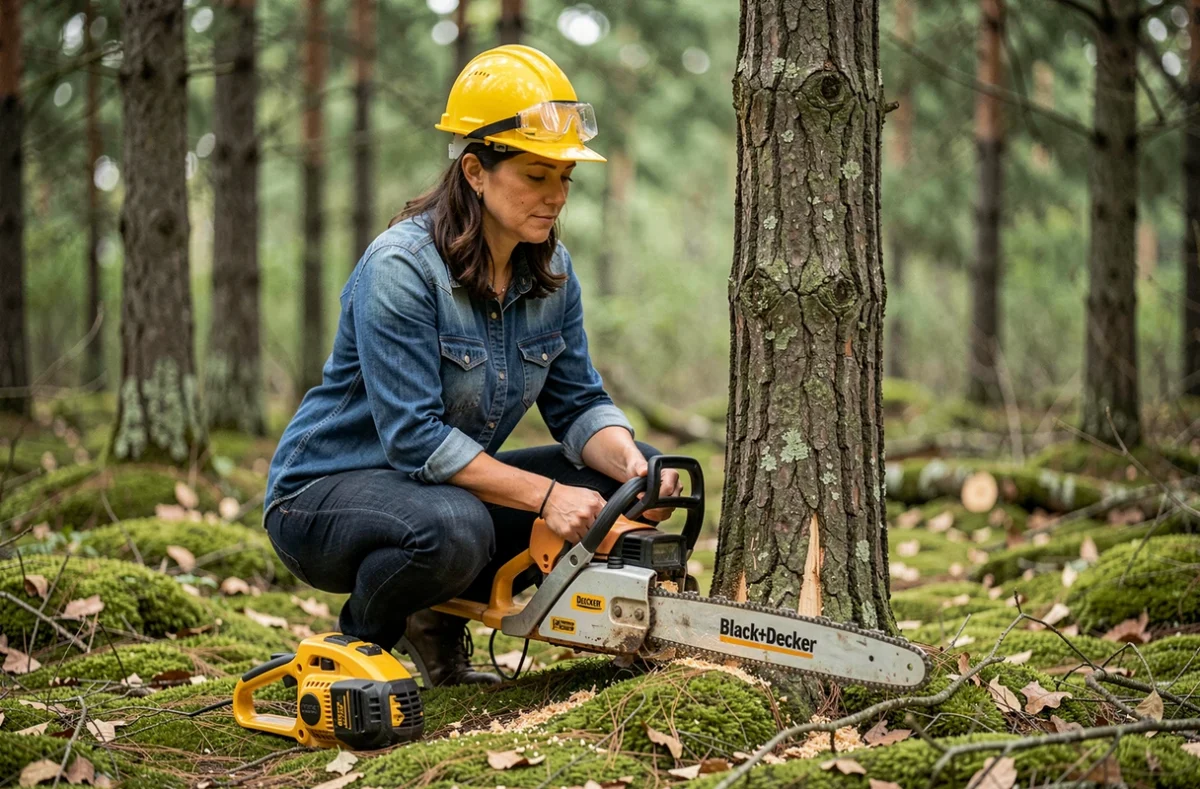
One point that product sheets do not mention: the European regulation 2023/1542 on batteries requires, starting February 18, 2027, that all portable battery-operated devices be designed so that the user can remove and replace the battery with common tools. Replacement batteries must remain available for at least five years after the end of the model’s commercialization.
The GKC3630L25-QW already uses a removable battery, making it compliant in this regard. The question is more about the long-term availability of Black+Decker 36 V packs. The brand’s 36 V platform remains poorly supplied with compatible devices, unlike the 18 V ranges where the catalog is much broader.
If you are considering investing in the Black+Decker ecosystem, keep in mind that the 36 V battery only shares compatibility with a few tools. The 18 V battery, on the other hand, works with dozens of machines (drills, blowers, hedge trimmers). Choosing the GKC3630L25-QW means accepting a limited ecosystem for greater autonomy.
Black+Decker GKC3630L25-QW against battery alternatives
Comparing this chainsaw with competing models in the same price range helps to identify its strengths and weaknesses.
- Against an Einhell GE-LC 18 Li (18 V), the Black+Decker offers significantly longer autonomy but cuts slower and weighs more.
- Against a Makita DUC254Z (18 V), the difference in finish and chain speed is marked. The Makita cuts faster but is sold without a battery or charger, which increases the total budget.
- Against Stihl MSA models (battery range), the price comparison is no longer in the same category at all. Stihl targets a semi-professional audience with corresponding prices.
The GKC3630L25-QW finds its place with individuals looking for a complete machine (battery and charger included) at a reasonable price, without aiming for raw performance. It is a chainsaw for regular maintenance, not an intensive cutting tool.
The choice boils down to a question of priority: if autonomy and simplicity matter more than cutting speed, the GKC3630L25-QW fulfills its role. If you regularly cut hardwood or sections over twenty centimeters, consider a model with a faster chain, even if it means sacrificing some endurance.