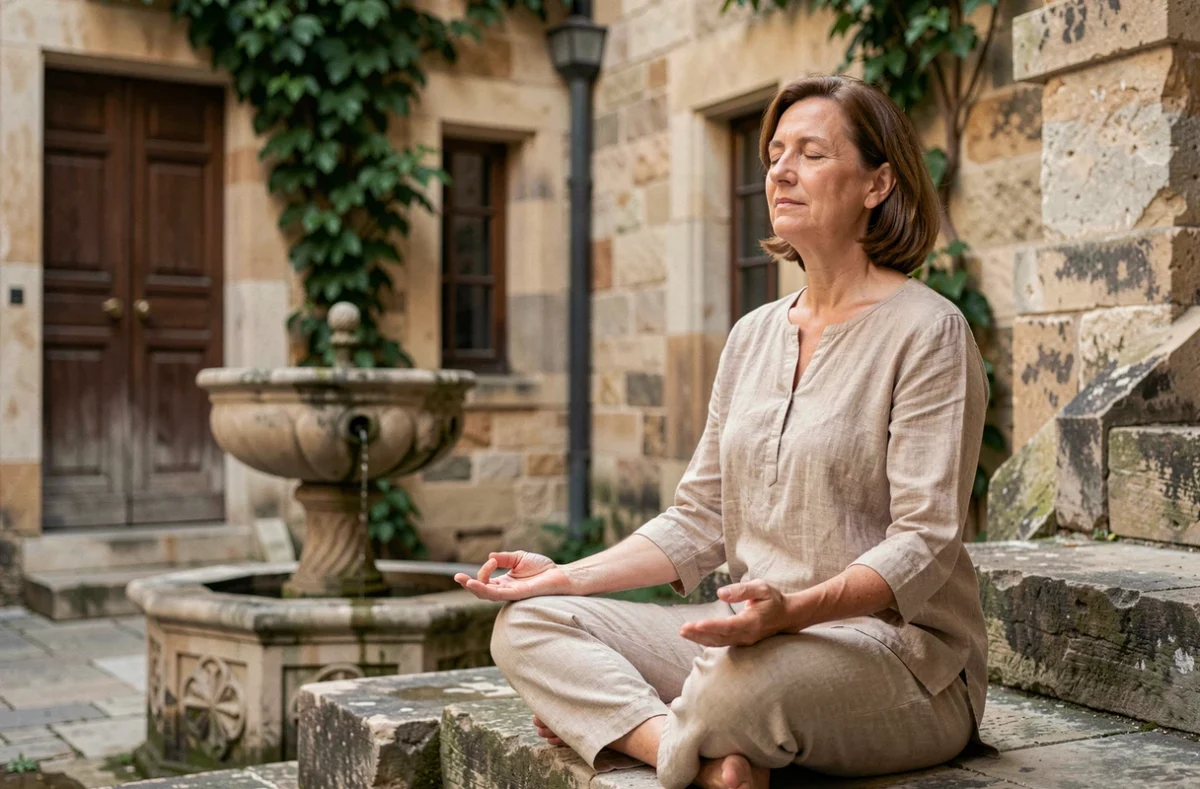
Most guides on monastic retreats list locations and benefits without addressing the practical constraints that determine the success of the stay. We recommend starting with the operational aspects: reception conditions, economic model, and the rhythm imposed by the community. Withdrawing to a monastery to find inner peace requires preparation that mainstream articles often underestimate.
Monastic Accommodation: Reception Conditions Segmented by Profile
Monasteries do not operate like guesthouses. Reception is segmented by gender, group size, and sometimes by denomination. At the Abbey of Solesmes, single men or small groups stay in the hospitality located within the monastic enclosure. Women and families are directed to small separate houses outside the enclosure. Large groups have another site altogether.
This organization is never anecdotal. It determines the degree of immersion in community life: a man housed inside the enclosure will hear the services from his room and participate in meals close to the monks. A woman staying outside will have to travel to reach the church, the only space accessible to the public.
Before making any reservation, we recommend contacting the hospitality directly to verify the type of accommodation offered, potential mixed-gender arrangements, and opening periods. To explore in detail how to withdraw to a monastery, one must first understand these practical distinctions that each community manages according to its own rules.
Financial Contribution in Monastery: Neither Hotel Rate Nor Free of Charge
The model is based on a contribution to costs, not on a pricing grid. At Solesmes, the indicative cost is 40 euros for twenty-four hours. This amount covers accommodation and meals, but it remains indicative: most communities practice the principle of “each according to their means.”
This flexibility sometimes creates discomfort among retreatants who do not know how much to give. The unspoken rule is simple: the contribution should at least cover the actual costs of accommodation and food. Giving less means asking the monks to subsidize your stay. Giving much more is considered a donation, which may be tax-deductible in some cases.
Several abbeys mention a minimum rate on their site, while others leave it entirely to the visitor’s discretion. We observe that places that display an indicative amount reduce the discomfort related to this question without excluding people with modest incomes.
Rhythm of Services and Time Constraints: What the Monastic Day Imposes
A monastic retreat is not a stay in free silence. The liturgical services structure the day and modify access to spaces. The church may be closed to visitors during certain hours, and arriving at the monastery during a service sometimes means waiting outside.
The typical program of a day in a Benedictine monastery includes several services spread from dawn to dusk. The retreatant is not obliged to attend, but the collective rhythm imposes itself: meal times are aligned with the services, silence is reinforced at certain hours, and lights are turned off early in the evening.
- Check the reception hours before departure: some communities do not accept arrivals after a specific time, often early in the afternoon
- Note that only the church is accessible to the public; the rest of the monastery (cloister, monks’ refectory, cells) is not open for visits
- Anticipate the lack of phone reception or Wi-Fi in many abbeys, which can pose a logistical problem if you haven’t informed your contacts
This time constraint is precisely what distinguishes a monastic retreat from a meditation stay in a secular center. The framework is non-negotiable, and it is this rigidity that produces the break effect sought by retreatants.
Autonomous, Liturgical, or Accompanied Retreat: Three Distinct Formats
Not all stays in monasteries are alike. We distinguish three formats that retreatants often confuse.
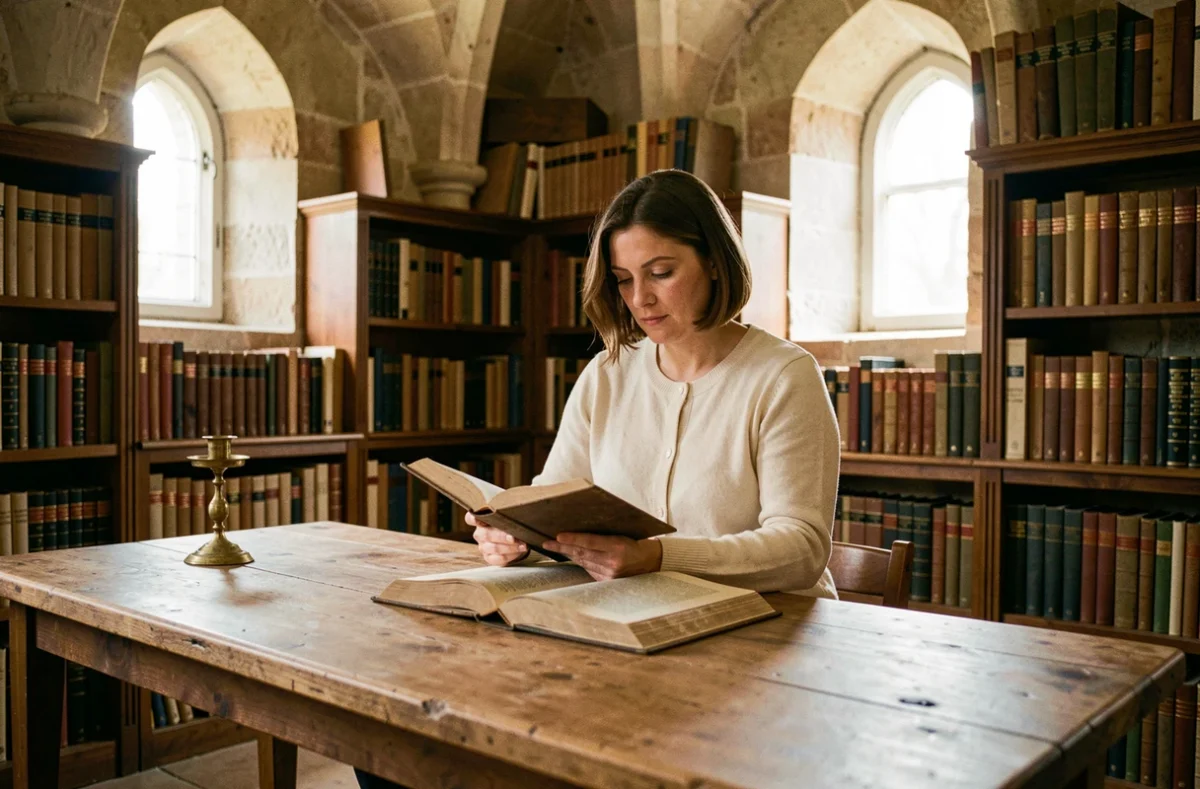
The autonomous retreat offers accommodation and a framework of silence, without an imposed program. The retreatant organizes their days freely: reading, walking, personal prayer, or simply resting. This is the most common format in Benedictine abbeys.
The liturgical retreat involves active participation in the services. The retreatant follows the rhythm of the monks, attends the canonical hours, and shares, to some extent, the life of the community. This format is suitable for those already familiar with the liturgy.
The accompanied retreat includes individual exchanges with a monk or nun. At Solesmes, this type of accompaniment is possible but “within the limits” of the community’s availability. Individual spiritual accompaniment is never guaranteed and must be explicitly requested at the time of booking.
- Autonomous retreat: suitable for those seeking primarily silence and solitude, without a constraining religious framework
- Liturgical retreat: for those who wish to immerse themselves in communal prayer and Gregorian chant
- Accompanied retreat: reserved for those seeking a structured spiritual dialogue, provided it is requested in advance
Mental Preparation Before a Monastic Retreat: Adjusting Expectations
The first mistake is to arrive with the idea that silence will mechanically produce calm. The first days often amplify inner agitation rather than calm it. The absence of external stimuli brings up thoughts, emotions, and sometimes deep boredom.
We recommend practicing a few days of voluntary reduction of screens and noise before departure. This transition period reduces the shock of total silence and allows for a quicker entry into the monastic rhythm.
Beginners also tend to overestimate the necessary duration. A first stay of two to three nights is sufficient to assess whether the format suits them. Extending beyond a week without prior experience exposes one to discomfort that can turn the retreat into a trial rather than a resource.
The monastery does not heal anything by itself. It offers a framework, silence, and a rhythm. What the retreatant makes of it depends on their preparation, expectations, and ability to accept that inner peace cannot be commanded on a schedule.